Wednesday, April 17, 2013

The Common Language Problem

There is an interesting discussion going on the Visible Evidence listserv right now about the definition of propaganda. Interesting for what individual contributors are saying but also interesting because a number of those emailing seemed to think that matter was basic and settled but the discussion showed precisely how little agreement documentary scholars had on exactly how to define propaganda.

I won't summarize the debates but in short they point to one key problem in defining propaganda. Film scholars have a set of critical priorities that lead us to avoid the term propaganda. It's value-laden, it obscures more than it reveals, and it revels in a Manichaean division between good and bad nonfiction. The problem is that the term has a wide popular usage. There is no reason scholars cannot (and should not) resist popular terminology and usage, but they can resist it only to a point. For instance, we do not need to label Thin Blue Line a propaganda film simply because it has a strong polemic and in journalistic terms is not "balanced." But by nearly every measure the Why We Fight series are propaganda films and no amount of desisting the term is going to change that. We could come up with a less value-laden term like "persuasive rhetoric film" just as we could invent a "Manichaean frontier narrative film" to replace "Western." But that's little guarantee that scholars won't substitute "propaganda" or "Western" in their mind as familiar concept-clusters. The popular term has irrevocably shaped the object study and at least some aspect of how we understand it.

At one point in his Craft of Sociology, Pierre Bourdieu notes that the scientist makes a break from common language but the social scientist has to work with common language to some extent. This is one instance that I'm fine with insisting on analytical clarity to our vocabulary but think this analysis needs to take into account the common language usage as well.

Monday, April 08, 2013

Why Scholarly Apparatus is Useful

This week had me rereading (for teaching) Deleuze's Cinema 2, or at least a chunk of it. It's a book that provokes new reflections every time I read it. Sometimes the thought-provoking parts are those that aren't even central to his core argument. The bit players are worthy in their own right.

And yet those throwaway claims can be frustrating. At one point he casually mentions that the Japanese don't have much use for science fiction. Which is an intriguing idea, but is it true and, if so, how? Is this something Deleuze himself concluded after watching a lot of Japanese films? A common view of area scholars of Japanese culture? A pet theory of a friend of his? A guess? We don't know, because there is no footnote.

I know Deleuze is not an applied scholar or a film historian and he's not going to have an apparatus of footnotes like I might expect those scholars to have. And I'm fine with that. Philosophy is a different kind of writing. And Deleuze's project is not ultimately about describing Japanese culture with veracity.

But this instance is a good reminder - useful particularly because cultural stereotypes are potentially at stake  - that the fussy apparatus of scholarship serves a useful purpose. In itself footnotes are no guarantee that scholars (or reviews) get it right. Deleuze could have cited a flawed or contestable study, or even if he cited a sound study then a given reader might not have the time or expertise to judge it. But it would be one check, a path for reexamination of the claim.

I know this is no earth-shattering stance. I just think there's a tough line to draw with evidentiary standards in theoretical work.

Friday, April 05, 2013

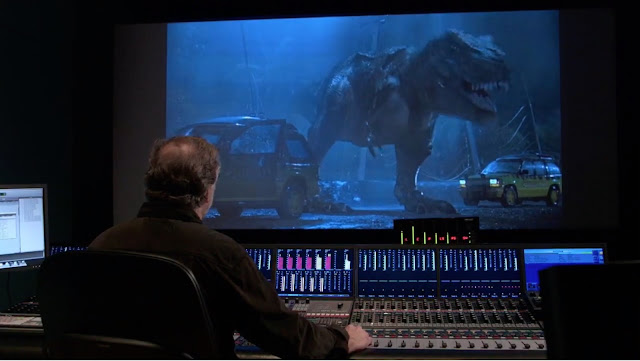
CFP: New Directions in Sound Studies (VLT)


CALL FOR PAPERS

The Velvet Light Trap
Issue #74: On Sound (New Directions in Sound Studies)

Submission deadline: August 1, 2013

The medium of sound, long placed in a secondary position to the visual within media studies, has experienced a considerable increase in scholarly attention over the past three decades, to the point that “sound studies” is now a distinct field of scholarship. Within media studies, sound-related research today expands well beyond the film and television score or soundtrack to include a broad range of scholarship on radio and popular music. And while sound studies still tends to cohere around media studies departments, an increasing amount of sound media research is interdisciplinary in nature. A “sonic turn” is under way across the humanities and social sciences with sound studies work coming out of philosophy, sociology, anthropology, history, science and technology studies, cultural geography, American studies, art history, and cultural studies. Recent issues of differences (2011) and American Quarterly (2011) and anthologies like The Sound Studies Reader (Jonathan Sterne, 2012) are just a few examples of this expanding range of interest.

This issue of The Velvet Light Trap aims to build upon many of the new lines of inquiry that are coming out of this intersection between sound media and various other scholarly perspectives. In that spirit, we are seeking essays for an issue on the research and study of sound in and across a range of media.

Potential areas of inquiry may include, but are by no means limited to:

  • analysis of music, voice, and sound effects in film, radio, television, video games, podcasting, and other digital or “new media, ” including significant developments in audio aesthetics and style
  • convergence of sound and visual media
  • sound art and experimental forms of sound media
  • materiality of sound, including sound reproduction and other technologies of sound
  • media industries, production cultures, and issues related to sound labor, audio production practices, or the commodification of sound
  • histories of audio media and archaeologies of mediated sound
  • aural representations of identity, power, difference and the politics of sound media
  • mediation of voices and language, noise and silence, and muteness, deafness, and other issues of the body and disability
  • listening practices and sound media in perception and everyday life
  • psychoacoustics and cognitive studies of sound media
  • architecture, acoustics, and space, including “soundscapes” and sound media in relation to public health and public policy
  • theoretical and methodological approaches to the study of sound media

Submissions should be between 6,000–7,500 words (approximately 20-25 pages double-spaced), formatted in Chicago style. Please submit an electronic copy of the paper, along with a one-page abstract, both saved as a Microsoft Word file. Remove any identifying information so that the submission is suitable for anonymous review. The journal’s Editorial Board will referee all submissions. Send electronic manuscripts and/or any questions to thevelvetlighttrap-AT-gmail.com. All submissions are due August 1, 2013.

Sunday, March 31, 2013

More Small Conferences, Please

However the SCMS election turns out, I second wholeheartedly Maria Pramaggiore's suggestion to "explore the possibility of sponsoring small, 1-day conferences in diverse locations, organized by caucuses or SIGs, to expand the opportunities for networking around specific research interests." I've mentioned on Twitter how impressed I am by the number and scope of topical conferences in the UK. Those in the US have trickled down to at times negligible numbers. I'm not sure exactly what's driving the trend here, but I think the discipline is poorer for it.

Tuesday, March 19, 2013

CFP: Cinephilia and Teaching


CALL FOR PAPERS

Book Collection: Cinephilia and Teaching
Editors: Rashna Wadia Richards and David T. Johnson
Abstract Deadline: June 1, 2013

We invite contributions to Cinephilia and Teaching, an edited collection of essays clustered around ideas of cinephilia and pedagogy. While essays may explicitly interrogate connections between ciné-love and teaching, we envision a collection that explores both concepts broadly, creating a productive dialogue between cinephilia and education, a long-neglected relationship in Film Studies.

In the introduction to their 2012 MLA collection Teaching Film, Lucy Fischer and Patrice Petro describe a central tension that characterizes the field: while Film Studies appears to belong to "the advanced guard—at times leading the way in the humanities," it "still suffers from a certain lack of recognition and its attendant deprivations." Such ambivalence is often reflected in the field's own attitude toward its subjects, and few sites of inquiry have demonstrated that tension more, and perhaps better, than cinephilia, a discourse traditionally associated with an obsessive love of cinema and its fragments, details, and remains. It is precisely these associations with fetishism that led to the scholarly dismissal of cinephilia in the 1960s. Thriving on the spirit of counterculture, Film Studies blossomed into an academic discipline by eschewing ciné-love in order to engage in systematic, critical inquiry. As Laura Mulvey notes in a recent dialogue with Peter Wollen, the transition "from cinephilia to film studies" occurred because "[w]hat begins with cinephilia, with the love of Hollywood, . . . becomes the theoretical study of Hollywood, becomes also a sustained critique of the ideology of Hollywood," and this critique is feasible only via "a rejection of your own cinephilia." Of course, even during that era of anti-cinephilic fervor, cinephilia never entirely disappeared from the experience of teaching and learning about film.

More recently, cinephilia has strongly re-entered Film Studies, playing a vital role in the field's quest for (re)definition in the era of new media and new avenues for criticism. In the last decade, cinephilia has been the subject of edited collections like Movie Mutations: The Changing Face of World Cinephilia; Cinephilia: Movies, Love, and Memory; Cinephilia in the Age of Digital Reproduction (in two volumes, no less); and monographs like Cinephilia and History, or the Wind in the Trees and Cinematic Flashes: Cinephilia and Classical Hollywood. Cinema Journal and Framework have also devoted special dossiers and issues, respectively, to the subject. Developments in the digital sphere, too, have enabled immense cinephilic discourse, in writing and in video, and we have seen more fluidity between academic and non-academic work, with scholars frequently writing in non-institutional contexts and popular critics exerting more influence on academic scholars.

Given its rising significance, it is curious that so little attention has been paid to how teaching engages with, or avoids, cinephilia. The overall goal of Cinephilia and Teaching is to consider the relationship between cinephilia and pedagogy from multiple locations and perspectives, both in and outside of university settings. Contributors may consider but are not limited to the following questions about cinephilia's connection with teaching:

  • Is there such a thing as cinephiliac pedagogy? 
  • Can the love of cinema inform the serious study of cinema for today's student? 
  • How does cinephilia inflect teaching in national and transnational contexts both in and outside of English-language institutions? 
  • Can cinephilia expand beyond its primary object of desire to encompass the teaching of television and new media? 
  • How might cinephilia serve as a site for conceiving pedagogy in broader ways, ones that extend well beyond the walls of the academy and potentially include those digital sites where, surely, if learning is taking place (as it is), teaching is as well? 
  • Might we consider cinema itself to be its own best "teacher"? If so, how do various films and filmmakers engage in pedagogical practices? 
  • How might we negotiate this relationship in ways that would productively think about why a cinema education matters today, whether it takes place in an academic setting or not? 
  • Might the 1960s rejection of cinephilia bear some warnings we might heed? In our rush to embrace its return, are we neglecting important pedagogical consequences that cinephilia's often optimistic tone may be inclined to ignore?

Please email a 500-word abstract and a short biographical note to richardsr@rhodes.edu and dtjohnson-AT_salisbury.edu by June 1, 2013. Complete essays will be due by December 31, 2013.

CFP: European Film Cultures


CALL FOR PAPERS

European Film Cultures: An International Conference
8-9 November 2013, Lund University, Sweden

ECREA Film Studies Section Interim Conference

The study of film as culture and of filmcultures has been an expanding area of study in recent years. The aim of this two-day conference is to focus on the most recent developments anddiscussdifferent ways of analyzing film in cultural contexts, as well as film as a cultural product, with the aim to debatehow different methodologies and perspectives can inspire each other in productive ways.

The European film industry is currently undergoing profound transformations on account of important economic, technological and cultural reasons. The internationalization of markets, the impact of the digital revolution, the repositioning of Europe on the global scene are some of the factors that currently impact on ideas and practices of European cinema.

The centrality of film to European cultures is both reaffirmed today and challenged by these radical changes. Thinking of film as culture and as a cultural product is essential to our understanding of the evolution of European cinemas within both industrial and creative contexts, and to an assessment of their role in and contribution to our societies. The conference is in dialogue with, and aims to contribute to, recent scholarship that focuses on cinema's participation in a network of relationships that connect cultural practices and economic realities, technological innovation and industrial production, policy and creativity.

Confirmed keynote speakers:

Professor Daniel Biltereyst, Centre for Cinema and Media Studies, Ghent University, Belgium. Provisional title: Multiple audiences: Revisiting historical film reception.

Professor Paul McDonald, Chair in Creative Industries, Department of Culture, Film and Media, University of Nottingham, UK
Provisional title: Reflections on the 'industry turn' in Film Studies.

We welcome papers on:

  • film production as a creative industry
  • evolving cultural practices and technologies of film distribution and consumption
  • film as culture, cultural functions of film
  • film festival studies
  • film culture and celebrity culture
  • national and transnational film cultures
  • European film culture in a global perspective
  • national and transnational film genres
  • private and amateur film cultures, as well as documentary and avant-garde
  • history of film culture
  • film as media event, film and the tourist industry
  • film audiences and the social experience of cinema-going
  • film between art and popular culture
  • film and fan culture
  • digital and onlinefilm cultures
We welcome proposals either as open call or as a part of a pre-constituted panel. Abstract submission deadline is 31 May 2013, and notification will follow shortly thereafter (around 30 June 2013). You do not have to be a member of ECREA to participate in the conference. Please submit your proposal to kannik-AT_ruc.dk, Helle Kannik Haastrup Associate Professor, Roskilde University, Denmark.

Proposals should include title, abstract (max 150 words), 3-5 key bibliographical references, name of the presenter and institutional affiliation. Panel organizers are asked to submit panel proposals including a panel title, a short description of the panel and information on all the papers as listed above. Panels may consist of 3-4 speakers with a maximum of 20 minutes speaking time each. When you write your proposal, please remember that the conference language is English.

The conference will be held at the Centre for Languages and Literature at Lund University, Sweden. Lund is among the oldest cities in Sweden, and can easily be reached via the airports in Copenhagen and Malmö. Further information on travel and accommodation will be given by the time papers are accepted.

CFP: Slow Cinema

CALL FOR PAPERS

Slow Cinema
Editors: Nuno Barradas Jorge, Tiago de Luca

Over the last decade, a cinematic trend characterized by aesthetic minimalism and slow tempo has made its mark on the world cinema map. Although directors such as Carlos Reygadas, Tsai Ming-liang, Béla Tarr, Pedro Costa and Lisandro Alonso, among others, do not pertain to a cohesive film movement, their films have been largely subsumed under the term ‘Slow Cinema’.

And yet, what exactly is Slow Cinema? While its presence in international film festivals continues to gain prominence worldwide, the term has too often been examined within the framework of a binary model that simply places it against the ‘intensified’ Hollywood style (Bordwell). With a view to rethinking its validity beyond dual systems and reductive binarisms (Nagib), this collection seeks to reposition Slow Cinema in a more expansive discursive and theoretical terrain. How can we productively understand this cinematic expression as inserted within diverse local, historical and (inter)cultural contexts, yet simultaneously as a response to wider industrial, social and even geopolitical forces at play?

For one thing, the emergence of Slow Cinema - or rather ‘slow cinemas’ - would seem to coincide in time with other cultural movements of capitalist resistance such as ‘slow food’, ‘slow travel’ and ‘slow media’. On the other hand, as far as cinema is concerned slow filmic traditions arguably stretch way back in time (European modernism, structural cinema, etc.), and this new trend seems to restore, as well as radicalize, tenets historically associated with cinematic realism (elliptical storytelling, non-professional actors, the long take, etc.). That a renewed phenomenological interest in materiality and duration should emerge at the moment the digital threatens to obliterate film’s link with physical reality might similarly suggest a resistance to simulation processes in our information- and stimuli-saturated era.

The proposed anthology thus seeks to examine this cinematic phenomenon in its multiple facets and in the present context of film as a rapidly changing technological and institutional practice. It aims to offer a global overview of this trend and map out how these cinemas interrelate on technical, aesthetic and political levels, while at the same time being wary of treating them as an ossified and undifferentiated corpus. The editors particularly welcome in-depth case studies that aim to contextualize this term within local and international traditions (cinematic or otherwise).

Topics may include, but are not limited to:

  •     Contextualizing ‘slow’ in contemporary cultural production
  •     The politics of slowness
  •     Theoretical approaches: cinematic realism, phenomenology, temporality
  •     Historical case studies of slow filmic traditions : realism, modernism, experimental cinema, etc.
  •     Slow Cinema and the international film festival circuit
  •     Slow Cinema in the digital era: modes of production, distribution and reception
  •     In-depth case-studies of current ‘slow cinemas’, and the ways in which they dialogue with local and global traditions, past and present. Directors may include but are not limited to: Lisandro Alonso (Argentina), Nuri Bilge Ceylan (Turkey), Pedro Costa (Portugal), Lav Diaz (Philippines), Bruno Dumont (France), Kim Ki-duk (South Korea), Amat Escalante (Mexico), Hou Hsiao-hsien (Taiwan), Naomi Kawase (Japan), Abbas Kiarostami (Iran), Hirokazu Koreda (Japan), Tsai Ming-liang (Taiwan), Carlos Reygadas (Mexico), Gus Van Sant (US), Albert Serra (Spain), Abderrahmane Sissako (Mauritania), Béla Tarr (Hungary), Apichatpong Weerasethakul (Thailand), Jia Zhangke (China).

Please send a chapter outline (300-400 words) accompanied by a brief author biography to Nuno Barradas Jorge (aaxnj1-AT-nottingham.ac.uk) and Tiago de Luca (tdeluca-AT-liverpool.ac.uk) by 31 March 2013. For more information, please visit the anthology blog: http://slowcinemabook.wordpress.com/

This volume was solicited by Edinburgh University Press (EUP) for the Traditions in World Cinema series. Contributors are expected to submit completed chapters by January 2014.

CFP: Contemporary Use of Fairy Tales

A call for submissions for an edited collection of essays on contemporary uses of fairy tales in popular culture.

The collection will focus on recent reinterpretations and reboots of classical fairy tales, ways the contemporary texts address the original tales and narratological implications of the repetitions and adjustments of these stories. In essays that explore the functions and consequences of fairy tale reboots, remakes and updates, authors will consider the ways fairy tale generic conventions have been revised over time, representations of race, gender, class and sexual identity, the roles of archetypes, mythic tropes and patterns and the emergence of self-referential and meta-tales within these texts.

Essays may also address fan culture influence on contemporary tales, opportunities for interactivity and the roles of stars in fairy tale reboots.

Text focus could include television series, feature-length films, comic books and graphic novels, games and animation. Possible topics include but are not limited to:

Fables (Bill Willingham/Vertigo, 2002-present); The Red Shoes (Kim Yong-gyun, 2005); Lost Girls (Alan Moore/Top Shelf, 2006); Hansel and Gretel (Yim Pil-Sung, 2007); Sydney White (Joe Nussbaum, 2007); Bluebeard (Catherine Breillat, 2009); The Sleeping Beauty (Catherine Breillat, 2010); Red Riding Hood (Catherine Hardwicke, 2011); Hanna (Joe Wright, 2011); Beastly (Daniel Barnz, 2011); Once Upon a Time (ABC, 2011-present); Grimm (NBC, 2011-present); Snow White and the Huntsman (Rupert Sanders, 2012); Mirror, Mirror (Tarsem Singh, 2012);  Hansel and Gretel (Anthony Ferrante, 2013); Hansel and Gretel: Witch Hunters (Tommy Wirkola, 2013); Jack the Giant Slayer (Bryan Singer, 2013)

Submit a two-page proposals by the deadline of June 19, 2013 to Dr. Melissa Lenos at melissalenos - AT - gmail - DOT - com; questions may be addressed to the same. Please also include a short bio. If your proposal is selected, the final essay (5000-8000 words) will be due on December 1, 2003.

Tuesday, January 22, 2013

CFP: Lasting Stars edited volume

CALL FOR PAPERS

Lasting Stars: Personas that Endure and Images that Fade

Lucy Bolton and Julie Lobalzo Wright, editors

Project Overview:
Film star studies have often focused on star images noted for their longevity and enduring status. The question of longevity, however, has been largely buried beneath the surface of the discipline. Although many studies have touched on the prolonged existence of some film stars, few studies have tackled longevity as a vital aspect of stardom. Underpinning longevity and film stardom are issues of aging, charisma, emblematic status, type and uniqueness, suggesting that many issues contribute to the lasting status of star images. In fact, these same areas factor into the fading of a star image, illustrating how closely success and failure are linked.

This collection of essays seek to fill the gap in star studies by addressing the issue of longevity through an examination of the various factors that affect the staying power or decline of a star’s persona. These factors may be the time of their emergence, their relationship with a particular genre of film, their capacity to stay in the public’s consciousness or their ability to age in a way that is deemed ‘appropriate’. This collection seeks to contribute to star studies by investigating why some stars burn bright and others fade away.

We invite proposals for chapters that investigate specific film star images through theoretical, cultural and historical means, analysing the relationship between film stardom and longevity or lack thereof. We are also interested in essays that examine how audience, culture and production trends can impact on the persistence of stardom. In addition, essays focused on images (film posters, publicity stills, paparazzi pictures) forming an integral part of enduring or fading stardom are particularly welcome as are submissions that look beyond Hollywood.

Possible topics include, but are not limited to:

·      Star images/personas frozen in time
·      Film genre and longevity
·      Relationships - both personal and professional - with directors, producers, costume designers
·      Role of fashion and costume
·      Role of political activity/philanthropy
·      Star images that endure past the star’s life
·      Celebrity and notoriety
·      Partner or group stardom
·      The comeback of a star image
·      How death can impact on longevity
·      Trends in national cinematic industries
·      Analysis of cultural factors that lead to longevity or fading
·      The ‘flash in the pan’ star image
·      Physical attributes or the transformation of the body
·      How aging impacts on the longevity of stardom
·      The relationship between race, gender, ethnicity or sexuality and enduring stardom
·      Transitions between industries - from star to director, producer, writer, fashion designer, singer

Submission Guidelines:
Please submit your abstracts of no more than 500 words and a brief CV via email to both editors by 1st May 2013. We have already had a positive initial response to this project from a highly respected academic publisher.  We anticipate that finished essays will be 5000 to 6000 words in length, including footnotes. Acceptance of proposals will be sent by email by the end of June 2013.

Please email your abstract and CV to both editors:
Lucy Bolton:  l.c.bolton-AT-qmul.ac.uk
Julie Lobalzo Wright: julielwright1-AT-gmail.com

Friday, January 04, 2013

Craftsperson Auteurism

I've been working on an essay on cinematography which, among other things, is wrestling with what it means to understand the cinematographer as an artist. And by happenstance, I watched on Mubi a documentary on production design, The Man on Lincoln's Nose (Daniel Raim, 2000). Like other documentaries of its kind (namely Visions of Light), the tone of the documentary (on designer Robert Boyle) is entirely laudatory. What I noticed was that the praise came in a rhetoric of execution: the craftsperson was an artist because she/he was able to take a vision explicit from the director and implicit from the story and actualize this vision into a visual form.

But there's at least another potential way of understand the art of the Hollywood craftsperson, as stylistic autonomy from the directorial vision. This is not how craftspeople in the classical Hollywood would have thought about themselves, at least not in public and perhaps not in private. They were wedded to the execution-functionalist model. Nonetheless, we do not have to understand their artistry in their own terms. In the case of cinematographers there were many ways in which mediocre or under-directed films had an impressive visual look. Off the top of my head, If Winter Comes is a terrific example. Maybe there's a case that Victor Saville is an undervalued auteur and in any case, the book/script has an emotional tenor of its own. Nonetheless, George Folsey's cinematography is superb (though superb like so many other films') and its aesthetic success owes less to its actualization the script than in the visual feel it imposes on the story.

It's easy, as in The Man on Lincoln's Nose, to imagine the craftsperson as the secret support behind canonical auteurs. I'm increasingly drawn to starting from the vantage of Hollywood's crafts and asking how it asks us to examine and judge films differently than an auteur-based system does.

Wednesday, December 05, 2012

CFP: Theorizing Character in Documentary (Visible Evidence XX)


I have decided to submit to Visible Evidence this year and am interested in proposing a panel. Let me know if you are interested.

Call for papers
Proposed panel for Visible Evidence XX (Stockholm, August 15-18, 2013)

Theorizing Character in Contemporary Nonfiction
To further one of the conference themes of “Affect, Agency, and Social Mobilization” I am proposing a panel theorizing “character” (as an idea, a narrational device, a conceptual category) in documentary film, with an emphasis on contemporary documentary. This may cover a number of areas: character driven documentary, "new documentary," reality TV, or any relevant strain in contemporary nonfiction. I've included the conference CFP below for guidance.

If interested, please contact me at ccagle AT temple DOT edu. The conference deadline is end of January, but I'd like to hear from anyone interested within the next month, by January 5, in order to gauge interest and to let everyone plan accordingly.

From the Conference call:
Affect, Agency and Social Mobilization
In Recording Reality, Desiring the Real (2011), Elizabeth Cowie defines the documentary as “an embodied storytelling that, while a narrativizing of reality in images and sounds, engages us with the actions and feelings of social actors, like characters in fiction”. Highlighting the importance of emotional engagement with the seen, Cowie proposes a return to the concept of identification in order to understand how, as “a matter of knowledge” “we must identify with facts and recognize their meanings”. Inspired by Cowie and others’ approaches to “documentary desire”, we propose, for Visible Evidence XX, a special attention to the consequences of the interdisciplinary affective turn, or die Wende zur Emotion, for the study of documentary cinema.
While inviting further theorizing of documentary viewing beyond problematic dualisms between rational understanding and emotional response, the affective turn in cinema and media studies also occasions a rethinking of the debates around instrumentalization of affect. It urges to re-examine the legacies of ‘committed documentary’ and, more broadly, the variety of affective rhetoric (from melodrama, to shock, trauma and spectacle) in documentary practices and, conversely, uses of documentary for mobilizing affect. Whereas historical studies of affective mobilization often have focused on state propaganda, we especially encourage investigations of historical and contemporary cases of mobilizing affect for political agency and social activism. These may include the extensive, ubiquitous documentation of ongoing social and political actions, movements and insurrections as well as the uses of documentary practices to articulate contemporary and historical structures of feeling: experiences of injury, hurt and violence, vulnerability and precariousness. This occasions, furthermore, investigations of affective strategies for preventing engagement as identification.


Sunday, December 02, 2012

Conference Calendar: 2013 edition

I thought I'd collect the current info I have on upcoming conferences. Please feel free to contact me with additions, and I'll update and repost as appropriate.

Closed calls:
MLA -  Boston, Jan 3-6, 2013
CAA - New York, Feb 13-16, 2013
Society for Cinema Studies - Chicago, Mar 6-10, 2013
ICA - London, June 17-21, 2013

Current calls:
Due Date: December 10, 2012 Society for Animation Studies - Los Angeles, June 23 - 27, 2013 [website | call]
Due Date: December 10, 2012 Expanding Cinema: Spatial Dimensions of Film Exhibition, Aesthetics, and Theory - Yale University, New Haven February 15-16, 2013 [call]
Due Date: December 17, 2012 BAFTSS Conference (British Association of Film, Television and Screen Studies) - University of Lincoln, England, April 19-21, 2013 [website]
Due Date: January 1, 2013 Screenwriting Research Network International Conference - Madison, Wisconsin, August 20 – 22, 2013 [website]
Due Date: January 10, 2013 Console-ing Passions - De Montfort University, Leicester, England, June 23-25, 2013 [website]
Due Date: January 11, 2013 Screen Studies Conference - Glasgow, Scotland, June 28-30, 2013. Theme: "Cosmopolitan Screens" [website]
Due Date: January 31, 2013 NECS Conference (European Network for Cinema and Media Studies) - Prague, June 20-22, 2013 Theme: "Media Politics ‒ Political Media" [website]
Due Date: January 31, 2013 Visible Evidence XX - Stockholm, Sweden, August 15-18, 2013 [website | call]
Due Date: January 31, 2013 UFVA (University Film/Video Association) Chapman University, Orange County, CA, July 29 to August 3, 2013 Theme: “Story First” [website]
Due Date (rolling): March 1, 2013 Media in Transition - MIT, Cambridge, Massachusetts, May 3-5, 2013 Theme: "Public Media, Private Media" [website]
Due Date: March 18, 2013 London Film and Media Conference, June 27-29, 2013 Theme: "The Pleasures of the Spectacle" [website]

Wednesday, November 28, 2012

IDFA reflections

I'm not a veteran film festival goer, partly out of habit, mostly out of geography. But the opportunity arose for me to attend the IDFA documentary film festival in Amsterdam so I eagerly pounced on it. I didn't attend the whole stretch, and there were many films I didn't see, but here are some trends and motifs I noticed:

- Investigation: I had tweeted that investigation might be thought of as an ur-ideology of contemporary doc. That's a hypothesis that will need more exploration, but it was striking to me how many of the films I saw were about crime -  C.K., about a dutch embezzler, Smash and Grab, about the Pink Panther jewel thief ring - or generally took the form of an investigative structure - Men at Lunch or Seconds of Lead. Much like the chase was a winning formula for transitional narrative cinema, the investigation captures the epistemology of narrativized doc. In fact in Seconds of Lead, an Iranian documentary reflecting on the revolution, the process of tracking down a projectionist stands in thematically for the spectator's understanding of the forgotten history of Iran's past.

- Narrative: Speaking of narrative, it was interesting to see the various ways that docs drew inspiration (consciously or not) from narrative film.  The Ridge and Sofia's Last Ambulance would make a terrific double bill, not only for what they say about emergency health care but also for their divergent approach to narrative. The Ridge was an unabashed action-adventure film based on suspense, with clearly differentiated and psychologized characters, whereas Sofia's Last Ambulance was an art film, premised on key gaps of knowledge. Somewhere in between, Camp 14: Total Control Zone, alternated between the clarity of flashbacks (about life in a North Korean labor camp) and the anomie of the present (an escapee's life in Seoul today).

- Economic life of the peasantry: Remarkably, three films I saw were about the economic struggles of the peasantry under globalization. Winter Nomads and Sons of the Land provided the clearest comparison, both about European farmers. But whereas Winter Nomads was lyrical and redemptive in its humanist theme, Sons of the Land looked at the microfoundations of macro economic collapse.  In another context, Where Heaven Meets Hell traced the lives of Indonesian sulfur miners.

- Documentary ethics: The question I heard time and again was how did the director or producer find the social actor ("character"). And usually this was the questions I most wanted to hear! Mostly the documentaries relied so much on the social actor, Camp 14Sons of the Land and Where Heaven Meets Hell all relied on an intimate rapport between filmmaker and subject. Other films, however, Seconds of Lead and Story for Modlns, seemed to disregard documentary ethics so much, they were almost textbook examples. In the Dark Room, about Carlos the Jackal's wife and child, took what I'd call a postmodern ethical approach, both exploiting and being exploited by the subject in order to throw up the question of truthful representation to begin with.

In all, it was refreshing to see so many terrific new documentaries in one go. Perhaps the film festival life could become more of a habit with me.

p.s See also Julia Barbosa's report at Keyframe.

Monday, November 26, 2012

CFP: Visible Evidence XX


Visible Evidence XX 
Stockholm, Sweden
August 15-18, 2013

Call for proposals

In 1990, a group of American scholars were provoked by the marginalization of documentary in the scholarly field of film studies. Their initiative for an international conference series resulted in Visible Evidence, first organized in 1993 by Jane Gaines at Duke University. In concert with this initiative appeared a number of influential books, such as Representing Reality (Bill Nichols, 1991), Blurred Boundaries (Bill Nichols, 1994), Theorizing Documentary (Michael Renov, ed., 1993), and Claiming the Real: The Griersonian Documentary and its Legitimations (Brian Winston, 1995). Ever since, these volumes have been followed by related and complementary work in the growing academic field of documentary studies.

The annual event of Visible Evidence has infused and keeps on inspiring the cross-disciplinary research on documentary film and media. The conferences have also encouraged and provided an important dialog between scholars and filmmakers, including opportunities for practitioners to screen new films and to present work in progress.

The international importance of Visible Evidence is remarkable, as a travelling
conference that moves across the globe, this year to take place in Canberra, Australia (December 19-21, 2012), co-hosted by the Australian National University and the National Film and Sound Archive.

The 2013 edition of Visible Evidence – its 20th anniversary! - will convene August 15-18 in Stockholm, hosted by the Department of Media Studies, Stockholm University, and organized in collaboration with the Royal Library, Filmform The Stockholm Archive of Art Film and Video, and the Swedish Film Institute.

In line with the previous conferences, Visible Evidence XX will address the history, theory, and practice of documentary cinema, television, video, audio recording, digital media, photography, and performance.


Proposals for panels and presentations
Proposed panels and presentations may address any aspect of documentary film and documentary screen cultures, or any theoretical or historical approach to documentary. At the same time, demarcating its 20th anniversary, Visible Evidence XX will pay special attention to a set of problems that have been subject to recurrent articulation during these two decades of conferences and related scholarship. These are salient issues that call for further exploration, new theoretical and historical insights in scholarly work, and which reverberate, or are subjectto conceptual work, in film and media.

For comprehensive information on the Conference, suggested topics and how to submit proposals, find out more in the pdf document below.   Information regarding conference and submitting proposals.

Thursday, November 22, 2012

CFP: Film Criticism in the Digital Age


CALL FOR PAPERS
"Film Criticism in the Digital Age: Media, Purposes and the Status of the Critic”

Editors: Mattias Frey and Cecilia Sayad

The aims and status of arts and culture criticism, in general, and film criticism, in particular, are currently up for revision and under attack, according to a whole host of indicators. Numerous articles and academic monographs bemoan the crisis of criticism or mourn the death of the critic. Regular symposia and conferences dwell on the many, sometimes prominent film journalists made redundant at newspapers, magazines and other ‘old media’ in past years; Sean P. Means lists fifty-five American movie critics who lost their jobs between 2006 and 2009. It is clear that the reasons for the current situation include the worldwide recession, the recent drop in print advertising revenues and, more fundamentally, the declining circulations attributable to reluctant consumers of print media. These developments have brought forth ontological—if not existential—questions about the purpose and worth of criticism in the age of WordPress blogospheres and a perceived democratization of criticism.

This edited anthology seeks to understand the current state of film criticism and how it has developed. It aims to examine the challenges that the Internet offers to the evaluation, promotion, and explanation of artistic works as well as digital technology’s impact on traditional concerns about the disposability or permanence of cultural criticism. The collection will furthermore contain a historical dimension that investigate how the status of the critic has changed in the last fifty years and to what extent critics can still intervene into current popular discourse about arts and culture.

The editors invite essays that expand, recast, and critically engage with some of these discussions.

Topics may include (but are not limited to):

--case studies which deliberate on the permanence or disposability of criticism in the digital age

--historical case studies on certain critics, critical schools, publications or other developments that preview or help us understand the current developments in film criticism

--case studies of non-Anglophone critics, critical schools, newspapers, magazines or other developments

--case studies which account for the persistent gendered and/or class-based economies that inflect contemporary film criticism

--comparative case studies with other media (theatre, visual art, music, or literature) or studies of critics who have appraised film through the lenses or in parallel to other media

--case studies which acknowledge the various forms by which film criticism has been transmitted (print, radio, television, online)

--comparative case studies that show how the status of the critic has—or has not—changed with the advent of digital technologies

Although the editors welcome broader theoretical treatments of these issues, they especially encourage well-researched chapters that explore what is at stake in film criticism’s digital age via in-depth case studies.

Please send a short abstract (250-400 words) with a brief author biography to Dr. Mattias Frey (m.j.frey@kent.ac.uk) and Dr. Cecilia Sayad (c.sayad@kent.ac.uk) by 1 December 2012. The editors are currently in contact with university and other major presses for this anthology, and contributors are expected to submit the completed essays by 1 September 2013.